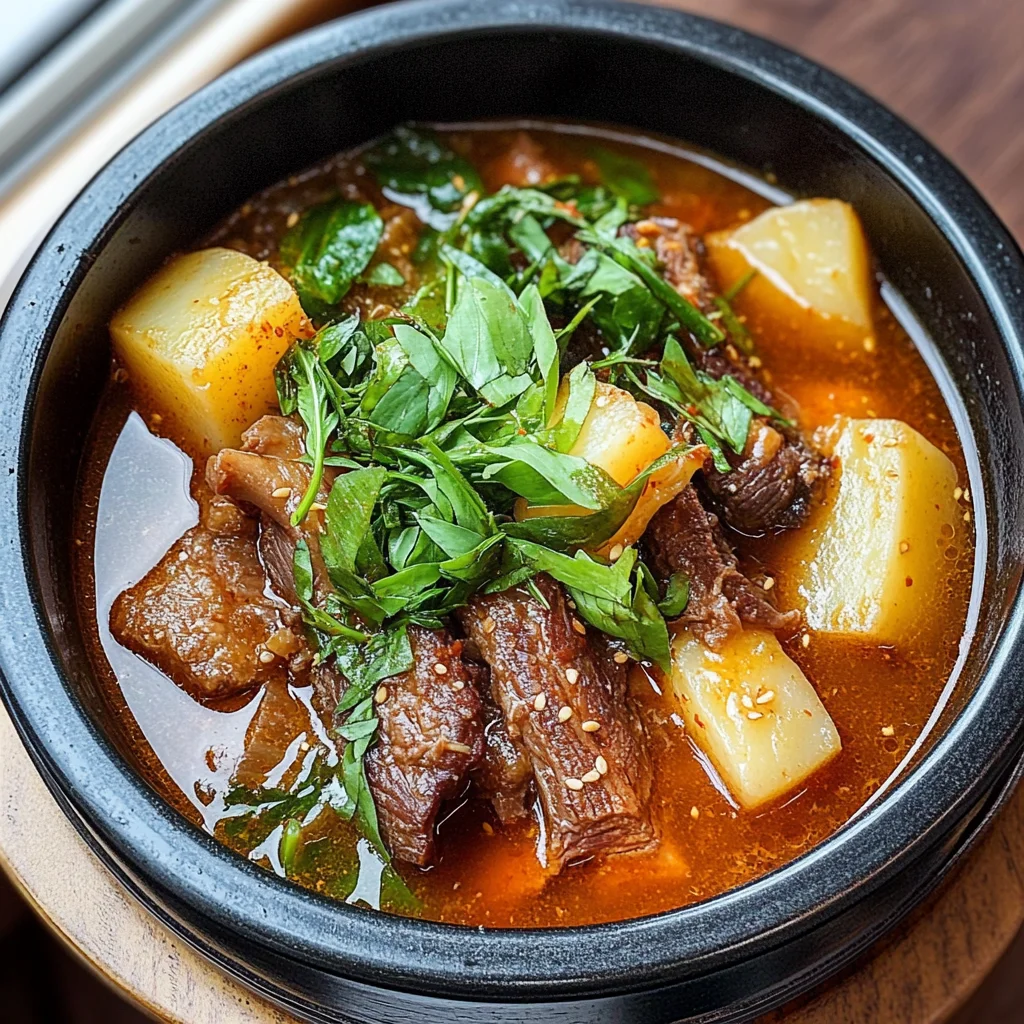
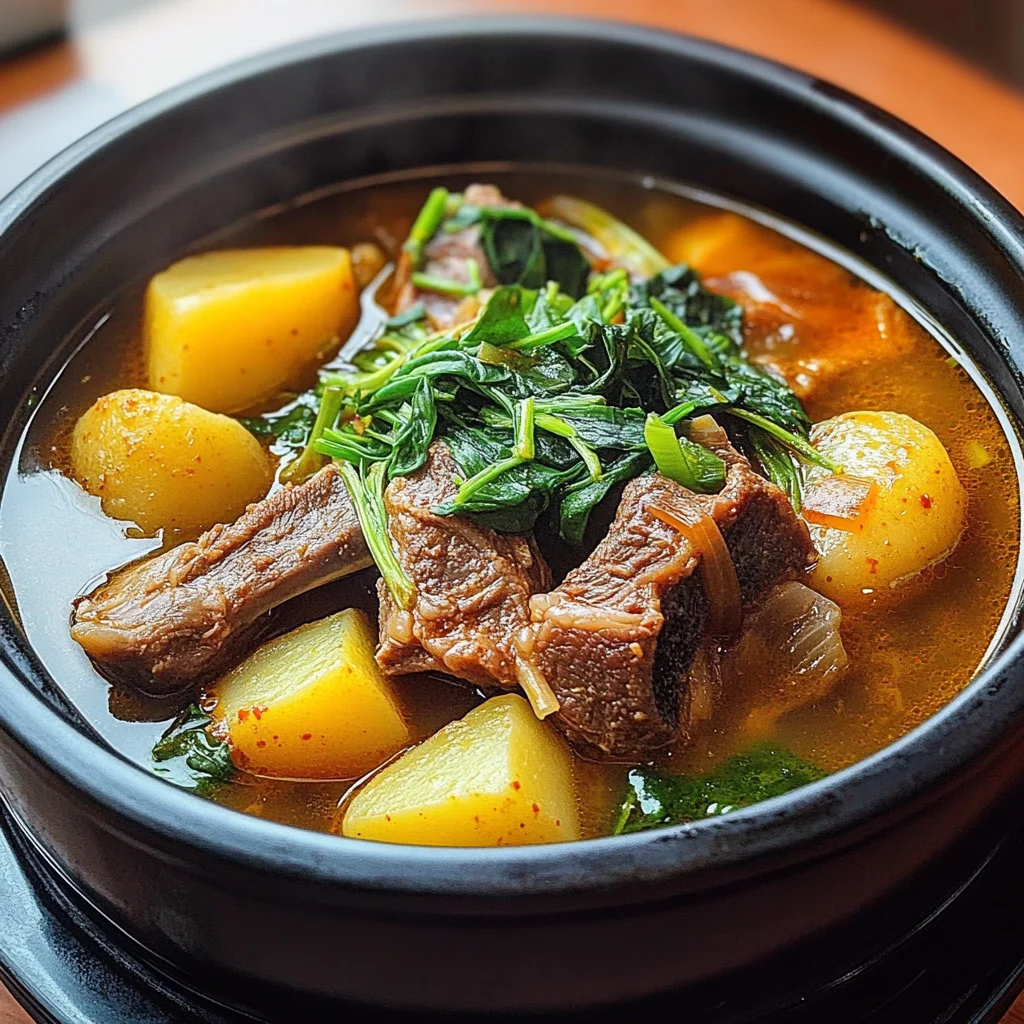
Gamjatang (beef Bone Soup) is a delightful and hearty dish that warms the soul with its rich flavors. This spicy soup, made with tender beef bones, potatoes, and aromatic spices, is perfect for family gatherings or cozy nights at home. Its unique combination of ingredients offers a robust taste experience that stands out among comfort foods. Whether you’re looking to impress guests or enjoy a simple meal, Gamjatang is sure to satisfy.
Jump to:
- Why You’ll Love This Recipe
- Tools and Preparation
- Essential Tools and Equipment
- Importance of Each Tool
- Ingredients
- For the Beef Broth
- For the Vegetables
- For Seasoning
- How to Make Gamjatang (beef Bone Soup)
- Step 1: Soak the Beef Bones
- Step 2: Prepare Ingredients
- Step 3: Make Seasoning Paste
- Step 4: Blanch the Beef Bones
- Step 5: Rinse Thoroughly
- Step 6: Simmer Broth
- Step 7: Blanch Radish Greens
- Step 8: Finalize Broth
- Step 9: Combine Seasonings
- Step 10: Add Perilla Leaves
- How to Serve Gamjatang (beef Bone Soup)
- With Steamed Rice
- Topped with Fresh Herbs
- Accompanied by Kimchi
- In a Large Sharing Bowl
- With Pickled Vegetables
- As a Late-Night Snack
- How to Perfect Gamjatang (beef Bone Soup)
- Best Side Dishes for Gamjatang (beef Bone Soup)
- Common Mistakes to Avoid
- Storage & Reheating Instructions
- Refrigerator Storage
- Freezing Gamjatang (beef Bone Soup)
- Reheating Gamjatang (beef Bone Soup)
- Frequently Asked Questions
- What is Gamjatang (beef Bone Soup)?
- How long does it take to cook Gamjatang?
- Can I make Gamjatang ahead of time?
- Is Gamjatang spicy?
- What can I substitute for beef neck bones?
- Final Thoughts
- 📖 Recipe Card
Why You’ll Love This Recipe
- Flavorful Depth: The combination of spices and beef bones creates a rich and savory broth that’s hard to resist.
- Comforting Warmth: Perfect for chilly days, this soup warms you from the inside out.
- Easy to Customize: You can add your favorite vegetables or adjust the spice level according to your preference.
- Nutrient-Rich: Packed with vitamins and minerals from the vegetables and beef broth, it’s a wholesome choice.
- Impressive Presentation: Serve it in a large bowl garnished with perilla leaves for an authentic touch.
Tools and Preparation
To make Gamjatang successfully, having the right tools makes a big difference. These essential items will help you craft this delicious soup with ease.
Essential Tools and Equipment
- Large pot
- Cutting board
- Chef’s knife
- Mixing bowl
- Strainer
Importance of Each Tool
- Large pot: Needed for simmering the beef bones and all ingredients together to develop rich flavors.
- Chef’s knife: Essential for chopping vegetables efficiently, ensuring even cooking throughout the soup.
- Strainer: Helps remove impurities from the broth after blanching the meat, resulting in a clearer soup.
Ingredients
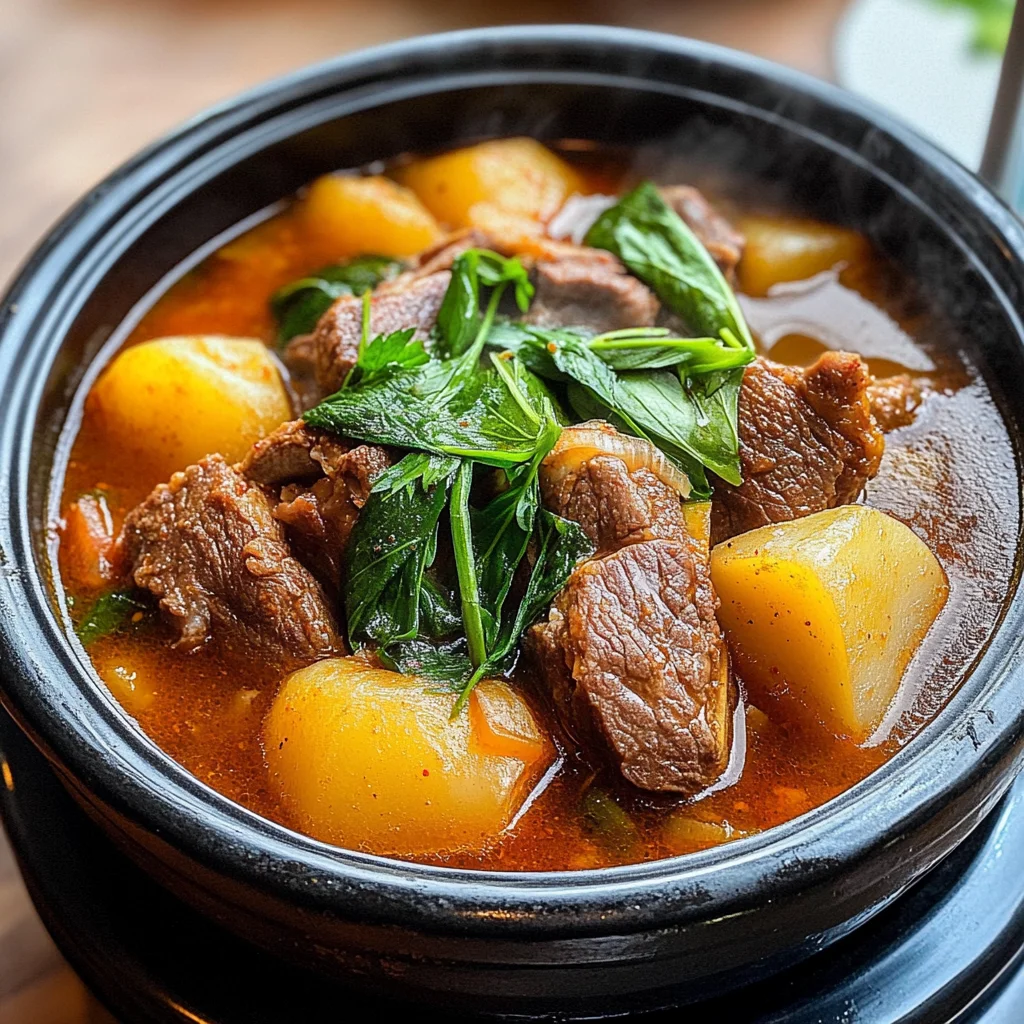
Gamjatang is a spicy soup made with tender & savory beef bones, potatoes, spices, and perilla leaves.
For the Beef Broth
- 2 lbs beef neck bones
- 8-10 cups water
- 2 tbsp doenjang (fermented soybean paste)
- 1 oz sliced ginger (or 3 bay leaves)
- 1 small onion
- 1 dried shiitake mushroom
For the Vegetables
- 1 daepa (large green onion) (or 2 green onions)
- 10 perilla leaves
- 1 large russet potato (peeled & cut into 6 pieces)
- 1/2 lb young radish greens (or napa cabbage)
- 1 serrano pepper (or Korean spicy pepper if you can find it)
For Seasoning
- 4 garlic cloves (minced)
- 2 tbsp gochugaru (Korean red pepper flakes)
- 1 tbsp gochujang (Korean red pepper paste)
- 2 tbsp fish sauce
- 3 tbsp perilla powder
- 1/2 tsp black pepper
- 1 tbsp plum syrup
- 1 tbsp Knorr chicken bouillon
- 2 tbsp water
How to Make Gamjatang (beef Bone Soup)
Step 1: Soak the Beef Bones
Soak the beef neck bones in cold water for an hour. Change the water once or twice during soaking to remove impurities.
Step 2: Prepare Ingredients
While soaking, prepare minced garlic, chopped green onion, sliced ginger, sliced onion, and washed young radish stems. Note: To prevent browning, hold peeled potatoes in cold water until ready to use.
Step 3: Make Seasoning Paste
In a mixing bowl, combine minced garlic, gochujang, gochugaru, fish sauce, perilla powder, black pepper, plum syrup, water, and Knorr chicken bouillon. Set aside for later use.
Step 4: Blanch the Beef Bones
After soaking for an hour, drain the beef neck bones and place them in a large pot. Cover with room temperature water and bring it to a boil over medium heat—this should take about 10-15 minutes. Once boiling, let it boil for just a couple of minutes before draining again.
Step 5: Rinse Thoroughly
Rinse the blanched beef bones under cold running water. Make sure to clean out any remaining gunk from within the bone crevices thoroughly.
Step 6: Simmer Broth
Return the cleaned beef bones back to a cleaned pot. Add 8 cups of water along with sliced ginger, onion, dried shiitake mushroom, and fermented soybean paste. Bring this mix to a boil; skim off any impurities floating on top before reducing heat to medium. Cover and simmer for 90 minutes.
Step 7: Blanch Radish Greens
In another pot of boiling water, blanch young radish greens for 1-2 minutes before setting them aside.
Step 8: Finalize Broth
After simmering for 90 minutes, discard ginger slices and set aside shiitake mushrooms to slice later.
Step 9: Combine Seasonings
Add 1-2 cups of additional water to your broth pot. Stir in your prepared seasoning paste along with potatoes, green onions, blanched radish greens, shiitake mushrooms (sliced), and serrano pepper slices. Cover again and cook for another 30 minutes.
Step 10: Add Perilla Leaves
Once cooking time is up and potatoes are chopstick tender add sliced perilla leaves last into your pot just before serving.
Enjoy your homemade Gamjatang as a comforting main dish full of flavor!
How to Serve Gamjatang (beef Bone Soup)
Gamjatang is a hearty and flavorful dish that can be enjoyed in various ways. Whether you’re hosting a gathering or enjoying a quiet meal at home, these serving suggestions will elevate your dining experience.
With Steamed Rice
- Serve hot bowls of gamjatang alongside fluffy steamed rice. The rice absorbs the rich broth and complements the spicy flavors perfectly.
Topped with Fresh Herbs
- Garnish your soup with chopped green onions or additional perilla leaves for an added burst of freshness and aroma.
Accompanied by Kimchi
- Pair gamjatang with traditional kimchi. The tangy and spicy notes of kimchi balance the richness of the beef bone broth.
In a Large Sharing Bowl
- For a communal dining experience, serve gamjatang in a large bowl, allowing everyone to help themselves. This makes it perfect for family gatherings or friendly get-togethers.
With Pickled Vegetables
- Offer pickled cucumbers or radishes on the side. Their crunch and acidity provide a refreshing contrast to the warm, savory soup.
As a Late-Night Snack
- Enjoy leftover gamjatang as a late-night snack. Reheat it for comfort food that warms you up after a long day.
How to Perfect Gamjatang (beef Bone Soup)
To achieve the best flavor and texture in your gamjatang, consider these helpful tips.
Choose Quality Bones: Using fresh beef neck bones ensures better flavor and tenderness in your soup.
Soak Thoroughly: Soaking the bones helps remove impurities, resulting in a clearer broth.
Blend Your Seasoning: Mixing your seasoning paste thoroughly before adding it to the pot ensures even flavor distribution throughout the soup.
Adjust Spice Levels: Feel free to modify the amount of gochugaru and serrano pepper based on your heat preference for personalized spice levels.
Let It Simmer: Allowing gamjatang to simmer for an extended period enhances its depth of flavor, making each bite more satisfying.
Serve Hot: Always serve gamjatang hot for the best taste and enjoyment. Reheating may dilute flavors, so keep it warm until serving.
Best Side Dishes for Gamjatang (beef Bone Soup)
Complementing your gamjatang with side dishes can make your meal even more delightful. Here are some excellent options to consider.
Kimchi: A staple in Korean cuisine, kimchi adds tanginess and spice that pairs beautifully with gamjatang.
Korean Potato Salad: Creamy potato salad provides a mild contrast to the spiciness of the soup, balancing flavors well.
Steamed Broccoli: Lightly steamed broccoli adds color and nutrition while offering a crunchy texture.
Pickled Radish: Sweet and tangy pickled radish enhances the meal with its refreshing crunch.
Spicy Cucumber Salad: This salad offers crispness and a zesty kick that complements the rich broth.
Rice Paper Rolls: Filled with fresh vegetables and herbs, these rolls provide a light option that contrasts well with the hearty soup.
Seaweed Salad: A light seaweed salad provides umami flavor while being low-calorie and nutritious.
Grilled Tofu Skewers: Marinated tofu skewers add protein without overshadowing the flavors of gamjatang, making them a great addition.
Common Mistakes to Avoid
Gamjatang (beef Bone Soup) is a flavorful dish, but getting it just right can be tricky. Here are some common mistakes to avoid.
- Bold Ingredients Selection: Using the wrong cuts of beef can affect the soup’s flavor. Always choose fresh beef neck bones for the best taste.
- Bold Ignoring Soaking Time: Skipping the soaking step can lead to a gamey taste. Soak the beef bones in cold water for at least an hour to remove impurities.
- Bold Overcooking Potatoes: Adding potatoes too early can cause them to disintegrate. Wait until the broth is nearly done before adding potatoes for perfect texture.
- Bold Neglecting Seasoning Balance: Not adjusting seasoning can result in bland soup. Taste and adjust the seasoning paste as needed throughout cooking for optimal flavor.
- Bold Mismanaging Cooking Time: Rushing through the cooking process will not allow flavors to develop. Take your time with simmering for a rich, savory broth.
Storage & Reheating Instructions
Refrigerator Storage
- Store in airtight containers for up to 3 days.
- Allow the soup to cool completely before refrigerating.
Freezing Gamjatang (beef Bone Soup)
- Freeze in airtight containers or heavy-duty freezer bags for up to 3 months.
- Leave some space in containers for expansion.
Reheating Gamjatang (beef Bone Soup)
- Oven: Preheat to 350°F and heat in an oven-safe dish covered with foil until warmed through.
- Microwave: Heat in a microwave-safe bowl, stirring occasionally, until hot.
- Stovetop: Simmer gently on medium heat, stirring occasionally, until heated through.
Frequently Asked Questions
Here are some frequently asked questions about Gamjatang (beef Bone Soup) that might help you.
What is Gamjatang (beef Bone Soup)?
Gamjatang is a Korean spicy soup made with tender beef bones, potatoes, spices, and perilla leaves. It’s known for its rich flavor and heartiness.
How long does it take to cook Gamjatang?
The total cooking time for Gamjatang is about 150 minutes, including preparation and simmering. Patience is key for developing deep flavors!
Can I make Gamjatang ahead of time?
Yes! In fact, making it ahead enhances the flavors. Store it in the refrigerator and reheat when ready to serve.
Is Gamjatang spicy?
Yes, Gamjatang has a spicy kick from gochugaru (Korean red pepper flakes) and serrano pepper. Adjust these ingredients according to your spice preference.
What can I substitute for beef neck bones?
If you prefer a different meat, chicken or turkey neck bones can be used as alternatives while still maintaining a delicious broth.
Final Thoughts
Gamjatang (beef Bone Soup) is not only hearty but also packed with flavors that warm your soul. This versatile recipe allows you to customize ingredients based on your preferences or what you have on hand. Give it a try, and enjoy this delightful Korean dish!
Did You Enjoy Making This Recipe? Please rate this recipe with ⭐⭐⭐⭐⭐ or leave a comment.
📖 Recipe Card
Print
Gamjatang (Beef Bone Soup)
- Total Time: 3 hours
- Yield: Approximately 6 servings 1x
Description
Gamjatang, a delightful beef bone soup, is a comforting Korean dish that warms the soul with its rich flavors. This spicy and hearty soup features tender beef neck bones simmered to perfection, infused with aromatic spices and complemented by wholesome vegetables like potatoes and perilla leaves. Whether it’s a family gathering or a cozy night in, Gamjatang provides a robust taste experience that’s sure to impress. With easy customization options and the ability to adjust spice levels, this nourishing dish stands out as a favorite among comfort foods. Enjoy Gamjatang alongside steamed rice or kimchi for an authentic Korean dining experience.
Ingredients
- 2 lbs beef neck bones
- 8–10 cups water
- 2 tbsp doenjang (fermented soybean paste)
- 1 oz sliced ginger
- 1 small onion
- 1 large russet potato (peeled & cut into pieces)
- 1 daepa (large green onion)
- 10 perilla leaves
- 4 garlic cloves (minced)
- 2 tbsp gochugaru (Korean red pepper flakes)
- 1 tbsp gochujang (Korean red pepper paste)
- ½ lb young radish greens
- Salt and black pepper to taste
Instructions
- Soak beef neck bones in cold water for an hour; change water once or twice.
- Prepare minced garlic, chopped green onion, sliced ginger, onion, and washed young radish greens.
- In a bowl, mix minced garlic, gochujang, gochugaru, doenjang, and black pepper for seasoning paste.
- Blanch soaked bones in boiling water for a few minutes and rinse under cold water.
- In a large pot, combine blanched bones with fresh water, ginger, onion, and seasoning paste. Bring to a boil then simmer for 90 minutes.
- Add potatoes, green onions, radish greens, and serrano pepper; cook for another 30 minutes until potatoes are tender.
- Stir in sliced perilla leaves before serving.
- Prep Time: 30 minutes
- Cook Time: 150 minutes
- Category: Main
- Method: Simmering
- Cuisine: Korean
Nutrition
- Serving Size: 1 bowl (300g)
- Calories: 320
- Sugar: 3g
- Sodium: 760mg
- Fat: 20g
- Saturated Fat: 8g
- Unsaturated Fat: 12g
- Trans Fat: 0g
- Carbohydrates: 24g
- Fiber: 4g
- Protein: 18g
- Cholesterol: 55mg